An aluminum flat pan awning is a durable shade structure made from interlocking aluminum panels that create a solid cover over patios and other outdoor areas. It can work well for residential or commercial properties where dependable sun protection and weather coverage matter. Before buying one, consider the aluminum thickness and overall design based on the needs of your space. Proper sizing and professional installation also play a major role in long-term performance.
Why Choose a Flat Pan Awning?
A flat pan awning uses rigid aluminum panels to create a continuous roof surface. Unlike fabric systems, it stays in place year-round.
Aluminum does not rot like wood and usually needs less maintenance than many outdoor cover materials. When properly designed and installed, the structure can also provide waterproof coverage.
It may suit you if you want:
- Reliable shade for everyday use
- A heavy-duty structure with low upkeep
- Permanent residential or commercial coverage
- A custom design built around your space
The main tradeoff is that a solid cover blocks more natural light than many fabric awnings.

Check Material and Design
Not every aluminum flat pan awning offers the same quality. Metal thickness and structural support both affect long-term performance.
Review Aluminum Thickness
Thicker aluminum can provide more rigidity, but the right thickness depends on the awning size and support system. Your installer should choose the material based on the span and expected weather exposure.
Ask how the panels are reinforced and supported. Those details matter more than price alone.

Look at Drainage Features
A solid awning must move rainwater away efficiently. Proper pitch helps prevent pooling, while gutters or downspouts can direct runoff away from nearby walls.

Understand Cost and Sizing
The cost of an aluminum flat pan awning varies because most projects are custom. Size is a major price factor, while structural needs can also affect the estimate.
Cost Factor | Why It Matters |
Awning size | Larger covers require more material |
Custom fabrication | Unique layouts can increase labor |
Structural support | Wider spans may need added framing |
Mounting conditions | Difficult attachment points can raise cost |
When comparing estimates, review what each quote includes. Accurate sizing also matters because the cover should provide useful shade without interfering with doors or pathways.
Weigh the Pros and Cons
An aluminum flat pan awning offers practical benefits, but it may not suit every property.
Pros
- Durable metal construction
- Low maintenance requirements
- Reliable shade and weather coverage
- Custom sizing
- Residential and commercial use
Cons
A solid cover can make the area below feel darker, especially near windows. It is also permanent, so it does not offer the flexibility of a retractable awning. If you want direct sunlight at times, another design may suit you better.
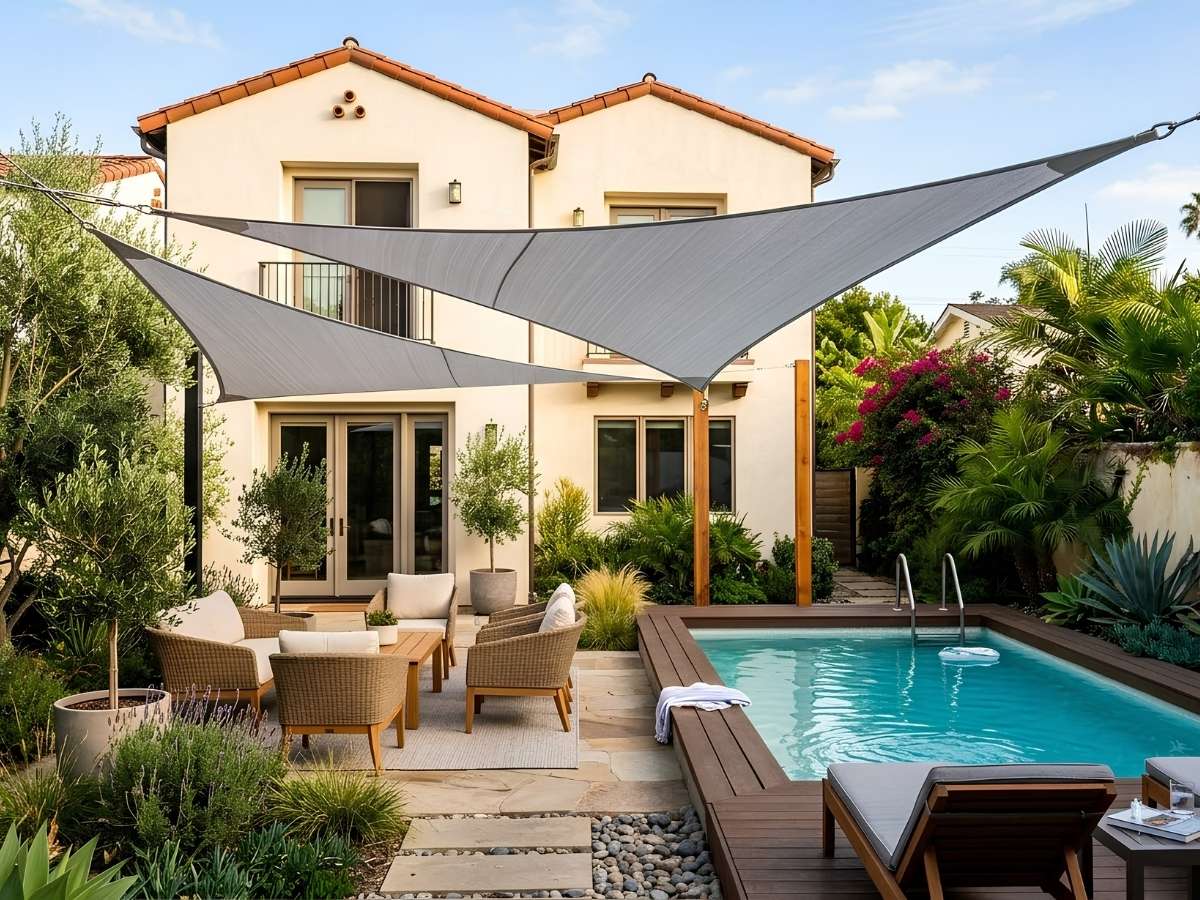
If a solid cover feels too permanent, pairing it with a drop shade can add flexibility. Check out this project in Long Beach, CA.
Plan for Professional Installation
Installation has a major effect on how well an aluminum flat pan awning performs over time. The awning needs to be attached correctly, and the support layout should match the cover size and structure. Proper pitch and drainage also need to be planned carefully so water moves away as intended without creating issues around the patio or walkway.
Maintenance is usually straightforward once the awning is installed. Occasional cleaning helps remove debris, while periodic inspections can catch loose hardware or blocked drainage before they become larger problems. Keeping up with these basic tasks can help the structure stay reliable with minimal upkeep.
Frequently Asked Questions About Aluminum Flat Pan Awnings
Can lighting be added underneath?
Yes. Some systems can accommodate outdoor lighting when electrical planning is handled before installation.
Can an awning attach to stucco?
It often can, but the attachment should connect to suitable framing rather than rely on the stucco surface itself.
Is aluminum noisy during rain?
Rain can sound more noticeable on metal than on fabric. The amount of noise depends on the panel design and rainfall intensity.
Can a ceiling fan be installed underneath?
Some aluminum covers can support a ceiling fan when the framing is designed for the added load. Structural and electrical requirements should be planned first.
Do aluminum awnings require permits?
Permit requirements vary by location and project size. Permanent patio covers may need approval because they attach to the building or use structural posts.
Choose a Flat Pan Awning Built to Last
An aluminum flat pan awning can be a smart investment when you want dependable shade and long-term outdoor coverage with minimal upkeep. The best results come from quality materials and a design built around your property. Professional installation helps ensure the structure is sized and supported correctly.
AAA Awnings is a leading choice for custom aluminum flat pan awnings built for lasting performance. We design and install heavy-duty aluminum covers to meet each property’s needs, giving you a structure that fits your space and performs reliably over time. Schedule an appointment today and invest in an aluminum patio cover built for dependable shade and protection.